



Last Updated: October 25, 2026
Quick Summary
Schedule a property consultation by identifying your transaction type, researching local agents, and sending a specific request that includes your timeline, financing status, and availability. Most initial consultations are free and last 30-60 minutes, covering your goals, market analysis, and next steps.
- Bring financial documents if buying, maintenance records if selling, and deal details if investing to make your consultation productive.
- Contact agents by phone for urgent timelines under 30 days, or use online forms and email for non-urgent requests with one business day response expected.
- Ask about consultation fees, services included, and agent credentials like CRS, ABR, or CFTP before booking to assess fit.
- Confirm your appointment in writing with date, time, location, and format, then arrive ready to listen and evaluate the agent.
- A good consultation feels like tailored advice, not a sales pitch, and should leave you with clear options and realistic expectations.
Table of Contents
- Why Scheduling a Property Consultation Matters
- Types of Property Consultations and Who They're For
- Questions to Ask a Real Estate Agent Before Your Consultation
- Real Estate Consultation Checklist: What to Bring and Prepare
- Real Estate Agent Services and Fees Explained
- Step-by-Step: How to Schedule Your Consultation
- What to Expect During Your Property Consultation
- Schedule Your Call with Integrity Real Estate
- Frequently Asked Questions
Why Scheduling a Property Consultation Matters
A property consultation is your foundation for confident real estate decisions, whether you're buying your first home, selling, or investing in fix-and-flip opportunities.
At Integrity Real Estate, we've seen how a thoughtful property consultation prevents costly mistakes by clarifying your goals, explaining local market conditions, and giving honest advice about what makes financial sense for you.
This guide covers how to schedule a Treasure Valley property consultation, what to prepare, what to expect, and how to choose an agent who prioritizes your interests.
Types of Property Consultations and Who They're For
A property consultation isn't one-size-fits-all. Knowing which type fits your situation gets you the right guidance from the start.
First-Time Buyer Consultation
First-time buyers face the steepest learning curve: financing options, what you can actually afford versus what a lender pre-approves, and neighborhoods.
A buyer consultation covers financial readiness, local market conditions, typical costs in your target areas, and how to avoid overpaying.
You'll also learn about timing: the Treasure Valley market moves quickly in certain seasons, and a consultation helps you understand when to make your move.
Find a Home That Fits, Not One That Stretches You Thin to explore what a buyer consultation includes.
Seller Consultation
If you're selling, a consultation focuses on pricing strategy, market timing, and what buyers in your area want. Many sellers price on what they think their home is worth rather than what the data shows; an agent with appraiser experience, like those at Integrity Real Estate, gives you pricing that reflects actual market conditions.
You'll also discuss timeline, selling in a two-week versus two-month window changes your strategy entirely.
Sell With a Strategy, Not a Guess to learn more about seller services.
Investment Property Consultation
Investors evaluate deals differently than owner-occupants. An investment consultation focuses on cash flow, repair costs, rental rates, and whether the numbers actually work, many properties sound good until you run the math.
An agent with investment expertise helps you identify properties with real upside and avoid ones that won't cash flow, experience with fix-and-flip deals and rental analysis matters here.
Find Deals With Real Upside to explore investment consultation details.
Questions to Ask a Real Estate Agent Before Your Consultation
Asking the right questions before you schedule helps you assess whether an agent is worth your time.
Ask how they price homes or evaluate deals.
Ask about response time. Real estate moves fast, and an agent who takes three days to reply costs you opportunities.
Ask what services they include, marketing, inspections, negotiations, or just paperwork, to prevent surprises later.
Ask about their background and certifications.
Real Estate Consultation Checklist: What to Bring and Prepare
Preparation makes your consultation more productive. Bring documents that give your agent the full picture.
Buyers should bring recent pay stubs, tax returns, and a pre-approval letter, which shows what you can actually afford and prevents wasted time on homes outside your range.
Investors should bring details on properties they've looked at, cash flow projections, deal criteria, and any repair estimates from fix-and-flip research.
For any consultation, bring a list of target neighborhoods or property types, your questions, and a notepad or phone for notes.
Here's what to prepare before you arrive:
| Preparation Item | Why It Matters | Bring If |
|---|---|---|
| Financial documents (pay stubs, tax returns, pre-approval) | Establishes your budget and financing readiness | You're buying |
| Property maintenance records | Helps with accurate pricing and buyer expectations | You're selling |
| Fix-and-flip project details | Guides investment analysis and deal evaluation | You're investing |
| List of target neighborhoods | Focuses the consultation on relevant areas | Any buyer or investor |
| Questions and concerns | Ensures you address what matters most to you | Everyone |
| Pen and notepad | Helps you capture key insights and next steps | Everyone |
Real Estate Agent Services and Fees Explained
Understanding what services an agent provides and how they're compensated removes confusion, and the awkwardness of arriving unsure whether you'll be billed for the meeting itself.
What a Consultation Typically Includes
An initial consultation is usually a working session, not a sales pitch. In most offices it covers:
- A review of your goals, timeline, and financial readiness.
- A market overview for your target area or property type.
- Comparable sales or rental analysis relevant to your situation.
Some agents provide a written summary or action plan afterward. Ask whether that's included, it signals how organized the agent is.
Is the Initial Consultation Free?
There's no single industry rule. Often an initial buyer or seller consultation is free as part of the agent's business development, while a formal valuation, written investment analysis, or research-heavy consultation may carry a fee, often credited toward commission if you later hire them. Before booking, ask: Is there a fee? If so, is it credited toward later services?
Ask about consultation fees in your first message. An agent who answers clearly and in writing is giving you a preview of how they will handle the compensation conversation later.
How Agents Are Compensated
An agent's primary role is representing your interests. Buyers get help finding properties, negotiating offers, and managing inspection and closing; sellers get marketing, showings, and negotiation; investors get deal analysis and opportunity sourcing.
Compensation is typically a commission, a percentage of the sale price, negotiated between seller and listing agent, then divided between the seller's and buyer's agents per their agreements. Since the National Association of Realtors settlement took effect in 2024, buyer-representation agreements must be in writing and state how the buyer's agent is compensated, so buyers should expect to discuss compensation directly, often at the consultation itself (Consumer Guide to Written Buyer Agreements).
For sellers, understanding and negotiating commission structure is part of the consultation.
Some agents charge flat or hourly fees for consultation-only services, worth asking about if you want guidance without committing to a transaction.
What the Fee Buys You
An agent's value comes from expertise, market knowledge, and negotiation skills. A good agent saves you money through better pricing, surfaces opportunities you'd miss, and protects you from costly mistakes.
Compare scope of services, not just percentage, two agents quoting the same commission can deliver very different marketing, negotiation, and follow-through. Ask each to describe what happens between listing and closing and who handles each step.
Do not sign a buyer-representation or listing agreement at the consultation without reading the compensation terms. The agreement should state the amount or rate, what it covers, and how and when it can be canceled.
Find a Home That Fits, Not One That Stretches You Thin to see how buyer representation works in practice, or Sell With a Strategy, Not a Guess for the seller side of the same conversation.
Step-by-Step: How to Schedule Your Consultation
Scheduling a property consultation is straightforward, but doing it right sets the tone.
Step 1: Identify what type of consultation you need. Buying, selling, or investing?
Step 2: Research local agents. Look for experience in your area and transaction type.
Step 3: Choose your booking channel. Most agents accept three channels, and each has a different response pattern:
- Phone call, fastest for urgent timing questions. Expect a live answer during business hours or a callback the same business day in most offices.
- Online form or scheduling link, best for non-urgent requests. Include your name, contact method, transaction type, target timeline, and two or three time windows that work for you.
- Email, best when you need to attach documents such as a pre-approval letter or a rent roll. Expect a reply within one business day from most full-time agents.
If your timeline is under 30 days, call rather than submit a form. A form may sit in an inbox until the next business day, and in a fast-moving market that delay can cost you a showing slot.
Step 4: Send a specific request. Be concrete, a message like this gets a faster, more useful reply than "I'd like to talk":
"I'm a first-time buyer looking to purchase in the Treasure Valley in the next three months. I have a pre-approval letter and want to schedule a 45-minute consultation to review the market and my options. I'm available Tuesday after 4 p.m. or Saturday morning."
Include four things in every request: transaction type, timeline, financing status (pre-approved, cash, or not yet started), and availability. Agents use those details to decide who takes the appointment and how long to block.
Step 8: Arrive on time and ready to listen. A consultation is two-way: you're evaluating the agent while they learn your situation.
What Happens After You Request an Appointment
Response expectations vary by office, but a common pattern among full-time agents is:
- Same business day, acknowledgment of your request and a proposed time.
- Within one business day, confirmation, plus a short pre-consultation questionnaire or a request for documents.
- Two to three business days before the meeting, a reminder and any preparation instructions.
If you don't hear back within one business day, send one follow-up. If the second message also goes unanswered, that silence is useful information about how the agent will communicate during a transaction.
Avoid booking a consultation through a general contact form that doesn't ask about your transaction type. Those forms often route to a general inbox, and your request can sit behind marketing inquiries. Use a scheduling link or a direct agent email when one is available.
Booking Options at a Glance
| Booking Method | Best For | Typical Response Window | What to Include |
|---|---|---|---|
| Phone call | Urgent timelines, quick questions | Same business day callback | Transaction type, timeline, availability |
| Online scheduling link | Non-urgent appointments | Within one business day | Name, contact, two or three time windows |
| Sending documents in advance | Within one business day | Attachments, financing status, questions | |
| In-person office visit | Complex situations, sellers, investors | Scheduled in advance | Maintenance records, rent rolls, criteria |
Let's Talk About What's Best for You when you're ready to pick a time, describe your situation, your timeline, and your questions, and the team will confirm a slot that fits.
What to Expect During Your Property Consultation
Knowing what to expect reduces anxiety and helps you get the most from the conversation.
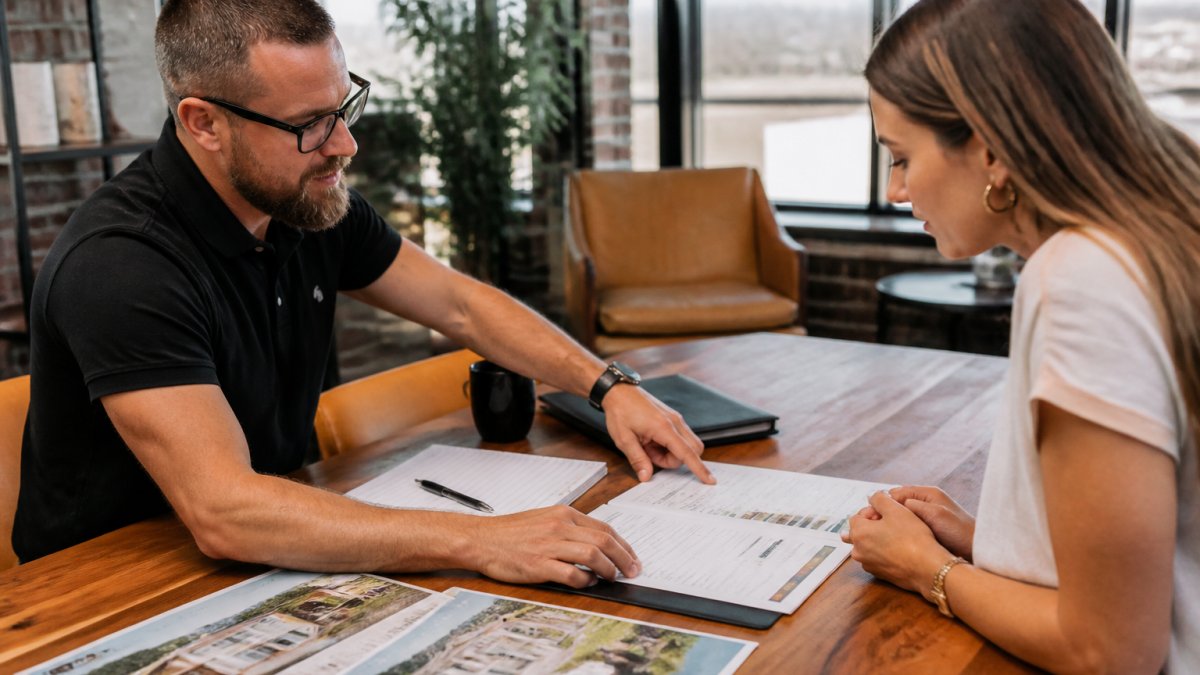
A typical consultation starts with the agent asking about your situation, timeline, financial readiness, goals, and concerns. You can explore active listings to prepare by reviewing properties in your target areas before the meeting.
You'll discuss next steps: property showings or pre-approval for buyers, listing prep or a formal listing appointment for sellers, and property alerts matching your criteria for investors.
The consultation typically lasts 30-60 minutes.
A good consultation feels like advice from someone who understands your situation, not a sales pitch.
Schedule Your Call with Integrity Real Estate
The right property consultation accelerates your progress and prevents expensive mistakes. Whether you're buying your first home, selling, or analyzing investment deals, expert guidance tailored to your goals makes the difference.
Let's Talk About What's Best for You to schedule your consultation today. Describe your situation, timeline, and questions, and we'll find a path that makes financial sense for where you are right now.
Frequently Asked Questions
What happens during a property consultation?
During a property consultation, you'll discuss your real estate goals, timeline, and financial situation with an agent. For buyers, this includes reviewing your budget and desired neighborhoods. For sellers, the agent analyzes your home's value using local market data and outlines a marketing strategy. For investors, the focus is on deal structure, cash flow analysis, and market opportunities. Most consultations last 30-60 minutes and are free.
What should I bring to a real estate consultation checklist?
Bring proof of income (pay stubs or tax returns), bank statements showing down payment savings, a list of must-haves and deal-breakers, and any pre-approval letters if you're a buyer. Sellers should gather recent utility bills, property tax statements, and home improvement records. Investors should bring deal criteria, financing details, and any properties you're already analyzing. Having these documents ready makes the consultation more productive.
Is a real estate consultation free?
Yes, initial property consultations with Integrity Real Estate are free. This is your opportunity to ask questions, understand the local market, and determine if the agent is the right fit for your goals. There's no obligation to hire the agent after the consultation. Many agents offer free consultations as part of their service model because it builds trust and helps clients make informed decisions.
What questions should I ask a real estate agent during a consultation?
Ask about their experience with your specific transaction type (buying, selling, or investing), how long they've served the market, their average time on market for listings, and their commission structure. Request references from past clients and clarify what services are included. For investors, ask how they identify deals and their experience with fix-and-flip projects. Understanding their background and approach helps you decide if they align with your needs.
The Treasure Valley market moves quickly. The agents who understand it, who know the neighborhoods, the pricing trends, and the opportunities, are the ones who help their clients succeed. Schedule your consultation and get started with clarity.

